Featured
Table of Contents
Get the full ebook now and begin developing your 2026 technique with data, not guesswork. Featured Image: CHIEW/Shutterstock.
Great news, SEO practitioners: The rise of Generative AI and big language designs (LLMs) has inspired a wave of SEO experimentation. While some misused AI to develop low-grade, algorithm-manipulating content, it eventually encouraged the industry to adopt more strategic material marketing, concentrating on new ideas and real worth. Now, as AI search algorithm intros and modifications stabilize, are back at the forefront, leaving you to wonder exactly what is on the horizon for acquiring exposure in SERPs in 2026.
Our experts have plenty to state about what real, experience-driven SEO appears like in 2026, plus which chances you need to take in the year ahead. Our contributors include:, Editor-in-Chief, Search Engine Journal, Handling Editor, Online Search Engine Journal, Elder News Writer, Search Engine Journal, News Writer, Browse Engine Journal, Partner & Head of Innovation (Organic & AI), Start planning your SEO method for the next year today.
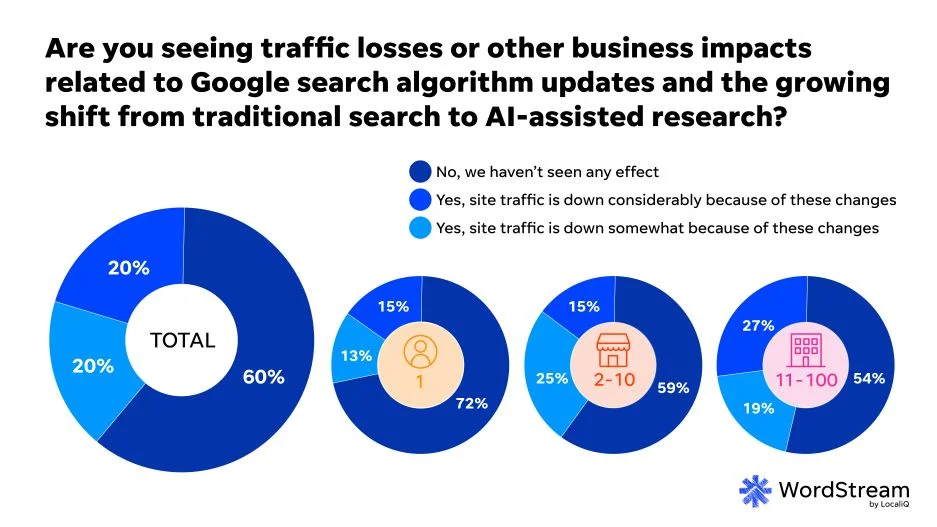
If 2025 taught us anything, it's that Google is doubling down on the shift to AI-powered search. (AIO) have already dramatically altered the method users connect with Google's search engine.

This puts marketers and small companies who rely on SEO for presence and leads in a hard area. The bright side? Adapting to AI-powered search is by no methods difficult, and it turns out; you just require to make some beneficial additions to it. We've unpacked Google's AI search pipeline, so we understand how its AI system ranks content.
Boosting Search Traffic Through Advanced AI Tactics
Keep checking out to find out how you can incorporate AI search best practices into your SEO strategies. After glancing under the hood of Google's AI search system, we uncovered the processes it uses to: Pull online material related to user queries. Assess the material to identify if it's useful, reliable, accurate, and recent.
One of the biggest differences between AI search systems and classic search engines is. When traditional search engines crawl websites, they parse (read), including all the links, metadata, and images. AI search, on the other hand, (normally consisting of 300 500 tokens) with embeddings for vector search.
Why do they divided the content up into smaller sized areas? Splitting material into smaller portions lets AI systems comprehend a page's significance rapidly and effectively. Pieces are basically little semantic blocks that AIs can use to quickly and. Without chunking, AI search designs would need to scan enormous full-page embeddings for every single single user inquiry, which would be exceptionally slow and imprecise.
Ranking in Conversational SEO
So, to prioritize speed, precision, and resource efficiency, AI systems utilize the chunking method to index content. Google's conventional search engine algorithm is biased against 'thin' material, which tends to be pages including fewer than 700 words. The idea is that for content to be truly practical, it needs to offer a minimum of 700 1,000 words worth of valuable information.
AI search systems do have a concept of thin material, it's just not connected to word count. Even if a piece of material is low on word count, it can perform well on AI search if it's thick with helpful details and structured into digestible pieces.
Does Your New York Method Account for Semantic Clusters?How you matters more in AI search than it does for organic search. In conventional SEO, backlinks and keywords are the dominant signals, and a clean page structure is more of a user experience factor. This is since online search engine index each page holistically (word-for-word), so they have the ability to endure loose structures like heading-free text blocks if the page's authority is strong.
That's how we found that: Google's AI assesses material in. AI utilizes a combination of and Clear format and structured data (semantic HTML and schema markup) make content and.
These consist of: Base ranking from the core algorithm Topic clarity from semantic understanding Old-school keyword matching Engagement signals Freshness Trust and authority Organization guidelines and safety bypasses As you can see, LLMs (large language designs) utilize a of and to rank material. Next, let's look at how AI search is impacting traditional SEO projects.
Technical SEO Tips for 2026 Search Success
If your material isn't structured to accommodate AI search tools, you might end up getting neglected, even if you traditionally rank well and have an outstanding backlink profile. Here are the most important takeaways. Keep in mind, AI systems consume your content in little chunks, not simultaneously. You require to break your short articles up into hyper-focused subheadings that do not venture off each subtopic.
If you do not follow a sensible page hierarchy, an AI system may wrongly identify that your post is about something else completely. Here are some pointers: Usage H2s and H3s to divide the post up into plainly specified subtopics Once the subtopic is set, DO NOT raise unassociated topics.
Since of this, AI search has a very genuine recency predisposition. Periodically upgrading old posts was always an SEO finest practice, but it's even more crucial in AI search.
While meaning-based search (vector search) is extremely sophisticated,. Search keywords help AI systems ensure the outcomes they obtain directly relate to the user's prompt. Keywords are just one 'vote' in a stack of seven similarly essential trust signals.
As we stated, the AI search pipeline is a hybrid mix of timeless SEO and AI-powered trust signals. Accordingly, there are numerous traditional SEO tactics that not only still work, but are important for success. Here are the basic SEO strategies that you ought to NOT desert: Resident SEO best practices, like managing reviews, NAP (name, address, and contact number) consistency, and GBP management, all strengthen the entity signals that AI systems utilize.

Latest Posts
Enhancing Scalability with Microservices Integration
Your Complete Roadmap to Modern AI Content Strategy
Guides to Building Future-Proof Search Results